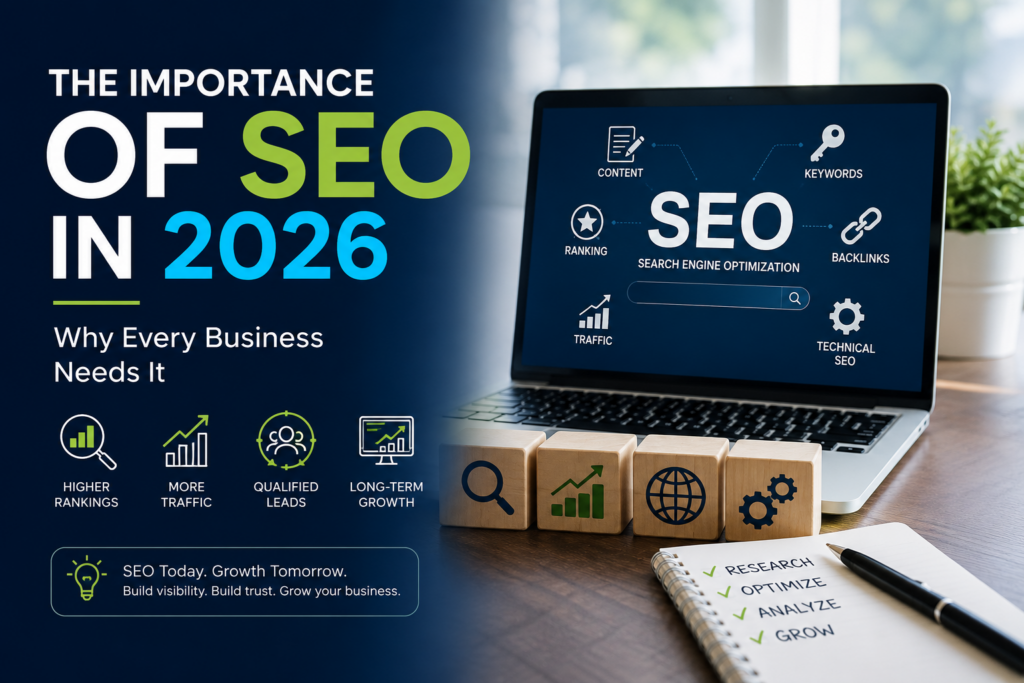
Search has changed dramatically. For years, SEO was largely built around a simple objective: help a website rank higher on Google for specific keywords. Businesses focused on rankings, backlinks, keyword placement, and technical optimization to convince search engines that their pages were relevant. But modern search is becoming far more sophisticated. Search engines are increasingly capable of understanding context, intent, relationships between topics, and the actual usefulness of information. As a result, SEO is moving beyond traditional ranking tactics toward a much broader concept of search visibility.
The shift from traditional SEO to modern SEO is also connected to the evolution of search itself. Google is no longer simply matching a typed keyword with a webpage. Search is becoming increasingly AI-powered, contextual, and conversational. Users can ask complex questions, describe problems in natural language, and expect a direct and useful answer. This means businesses need to understand not only what people search for, but also why they search for it and what information they genuinely need at that moment.
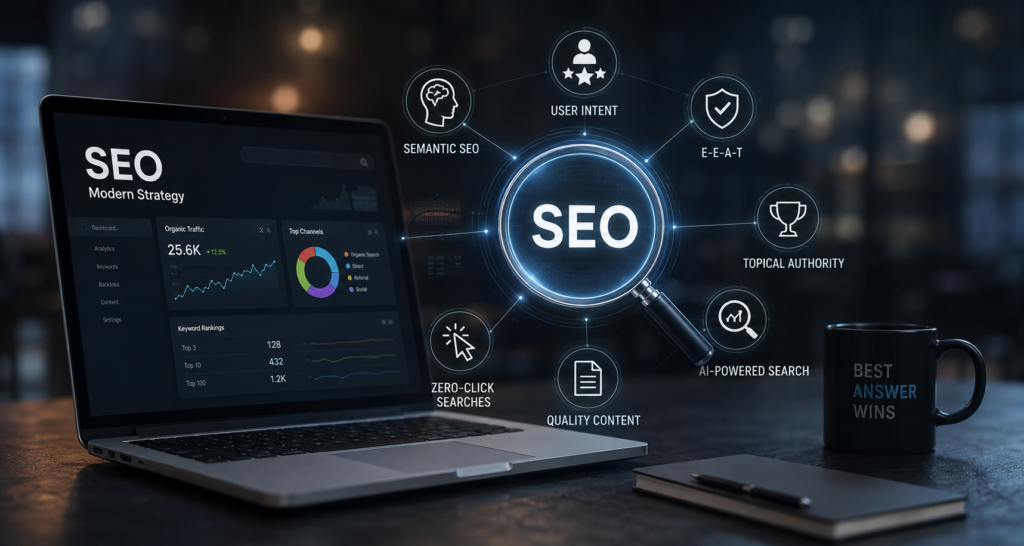
Search intent and user intent have therefore become central to effective SEO. A keyword by itself does not tell the complete story. Someone searching for “SEO services” may be looking for information, comparing providers, or preparing to purchase a service. Understanding the purpose behind a search allows businesses to create content that actually satisfies the user’s need rather than simply targeting a phrase.
This is where semantic SEO becomes increasingly important. Search engines are better at understanding the meaning and relationships behind words. A strong SEO strategy therefore does not depend on repeating one keyword throughout a page. Instead, it builds meaningful connections between related concepts, questions, entities, and topics. Businesses that consistently demonstrate knowledge across an entire subject can build stronger topical authority and become more relevant within their niche.
Another important concept is E-E-A-T: Experience, Expertise, Authoritativeness, and Trustworthiness. Search visibility increasingly depends on whether content demonstrates genuine knowledge and provides users with reliable information. Content that simply exists to capture search traffic may struggle to create long-term value. Content based on real experience, useful insights, credible information, and clear expertise has a stronger foundation for sustainable visibility.
The rise of zero-click searches is also changing the traditional definition of SEO success. Users can now receive answers directly within search results without clicking through to a website. Featured snippets, knowledge panels, search summaries, and AI-generated answers can satisfy a user’s immediate question before they ever visit a webpage. This does not make SEO less important. Instead, it expands the meaning of visibility beyond website traffic alone.
At the same time, AI-generated content has made content production easier than ever. Businesses can generate articles, captions, descriptions, and ideas within seconds. But accessibility does not automatically create value. When thousands of websites publish similar AI-generated material, generic content becomes easier to ignore. The difference comes from genuinely useful information, original perspectives, real experience, strong research, and content that solves a specific problem better than alternatives.
Brand authority is also becoming increasingly connected with SEO. A business that is consistently mentioned, recognized, trusted, and associated with a specific subject can create stronger signals across the digital ecosystem. SEO is therefore no longer an isolated activity performed only on a website. It is increasingly connected with brand building, content quality, reputation, and overall digital presence.
The future of search will continue to move toward understanding people rather than simply matching keywords. Search engines will become better at interpreting questions, context, entities, intent, and relationships between information. Businesses that focus only on manipulating rankings may find it increasingly difficult to maintain visibility.
Modern SEO is therefore not simply about convincing a search engine that a website is relevant. It is about becoming genuinely relevant to the person searching. The strongest SEO strategy is built around useful information, meaningful expertise, strong authority, and a clear understanding of what the audience actually needs.